Buy New
-39%
$21.32$21.32
FREE delivery Thursday, June 11 on orders shipped by Amazon over $35
Ships from: Amazon.com Sold by: Amazon.com
Used - Very Good
$13.63$13.63
$4.49 delivery June 11 - 13
Ships from: Big River Books LLC Sold by: Big River Books LLC
Sorry, there was a problem.
There was an error retrieving your Wish Lists. Please try again.Sorry, there was a problem.
List unavailable.
Download the free Kindle app and start reading Kindle books instantly on your smartphone, tablet, or computer - no Kindle device required.
Read instantly on your browser with Kindle for Web.
Using your mobile phone camera - scan the code below and download the Kindle app.
Follow the authors
OK
The Great Mental Models, Volume 3: Systems and Mathematics (The Great Mental Models Series)
Purchase options and add-ons
The third book in the timeless Great Mental Models series.
Time and time again, great thinkers such as Charlie Munger and Warren Buffett have credited their success to mental models–representations of how something works that can scale onto other fields.
Mastering a small number of mental models enables you to rapidly grasp new information, identify patterns others miss, and avoid the common mistakes that hold people back.
Volume 3 of The Great Mental Models series focuses on systems and mathematics, simplifying more than twenty-four key concepts from these technical fields into easy-to-understand terms. It provides insights into the unseen mechanisms that influence our environment and teaches you how to apply these principles to benefit your life.
Some of the mental models covered in this book include:
- Margin of Safety: Engineers design for extremes, not averages. To create a robust system, ensure a meaningful gap between what the system is capable of handling and what it is required to handle.
- Compounding: The most powerful force in the universe can work in domains other than money.
- The law of diminishing returns: Inputs to a system lead to more output, up until a point where each further unit of input will lead to a decreasing amount of output.
- Regression to the mean: Above- or below- average performance tends to correct towards the average over the long term.
The Great Mental Models series demystifies once elusive concepts and illuminates rich knowledge that traditional education overlooks. This series is the most comprehensive and accessible guide on using mental models to better understand our world, solve problems, and gain an advantage.
- Print length384 pages
- LanguageEnglish
- PublisherPortfolio
- Publication dateOctober 15, 2024
- Dimensions5.75 x 1.13 x 8.56 inches
- ISBN-100593719999
- ISBN-13978-0593719992
Book recommendations, author interviews, editors' picks, and more. Read it now
Frequently bought together

Customers who viewed this item also viewed
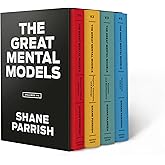
The Great Mental Models, Volume 4: Economics and Art (The Great Mental Models Series)HardcoverFREE Shipping on orders over $35 shipped by AmazonGet it as soon as Thursday, Jun 11
The Great Mental Models, Volume 1: General Thinking Concepts (The Great Mental Models Series)HardcoverFREE Shipping on orders over $35 shipped by AmazonGet it as soon as Thursday, Jun 11
The Great Mental Models, Volume 2: Physics, Chemistry, and Biology (The Great Mental Models Series)HardcoverFREE Shipping on orders over $35 shipped by AmazonGet it as soon as Thursday, Jun 11
Clear Thinking: Turning Ordinary Moments into Extraordinary ResultsHardcoverFREE Shipping on orders over $35 shipped by AmazonGet it as soon as Thursday, Jun 11
The Art of Thinking in Graphs: Illustrating the 52 Principles That Shape Our Productivity, Decision-Making, and the Way We ThinkPaperbackFREE Shipping on orders over $35 shipped by AmazonGet it as soon as Thursday, Jun 11
Customers also bought or read
- Clear Thinking: Turning Ordinary Moments into Extraordinary Results
Hardcover$16.91$16.91Delivery Thu, Jun 11 - All I Want To Know Is Where I'm Going To Die So I'll Never Go There: Buffett & Munger – A Study in Simplicity and Uncommon, Common Sense
Hardcover$37.90$37.90FREE delivery Thu, Jun 11 - The Book of Elon: A Guide to Purpose and Success
Just releasedPaperback$17.70$17.70Delivery Thu, Jun 11 - Mental Models: An AI’s Guide to 100 Thinking Tools That Humans Overlook (So You Can Outsmart Anyone) (Think Smarter)
Paperback$17.54$17.54Delivery Thu, Jun 11 - The Origins of Efficiency#1 Best SellerIndustrial Manufacturing
Hardcover$25.30$25.30Delivery Thu, Jun 11 - Thinking in Bets: Making Smarter Decisions When You Don't Have All the Facts
Paperback$15.62$15.62Delivery Thu, Jun 11 - The Great Mental Models Volume 3: Systems and Mathematics
Hardcover$98.64$98.64FREE delivery Thu, Jun 11 - Men and Rubber: The Story of Business (Farnam Street Timeless Classics)
Hardcover$21.80$21.80Delivery Thu, Jun 11 - The Almanack of Naval Ravikant: A Guide to Wealth and Happiness
Hardcover$19.96$19.96Delivery Thu, Jun 11 - Fooled by Randomness: The Hidden Role of Chance in Life and in the Markets (Incerto)#1 Best SellerBusiness Statistics
Paperback$12.68$12.68Delivery Thu, Jun 11 - Runnin' Down a Dream: How to Thrive in a Career You Actually Love
Hardcover$21.63$21.63Delivery Thu, Jun 11 - A Few Lessons for Investors and Managers From Warren Buffett
Hardcover$16.59$16.59Delivery Thu, Jun 11 - Wisdom Takes Work: Learn. Apply. Repeat. (The Stoic Virtues Series)
Hardcover$13.58$13.58Delivery Thu, Jun 11 - Six Easy Pieces: Essentials of Physics Explained by Its Most Brilliant Teacher
Paperback$15.25$15.25Delivery Thu, Jun 11 - Nick and Zak's Adventures in Capitalism: Words of Wisdom from the Nomad Partnership Letters
Paperback$14.99$14.99Delivery Thu, Jun 11 - Tiny Experiments: How to Live Freely in a Goal-Obsessed World
Hardcover$18.46$18.46Delivery Jun 23 - 30 - The Art of Uncertainty: How to Navigate Chance, Ignorance, Risk and Luck
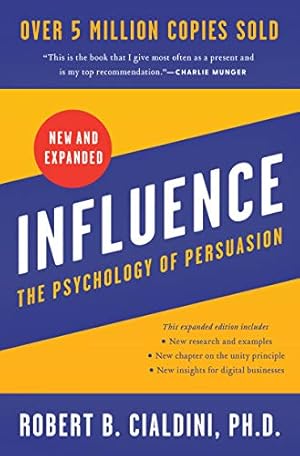
Hardcover$15.03$15.03Delivery Thu, Jun 11 - Influence, New and Expanded: The Essential Guide to the Psychology of Influence and Persuasion in Everyday Life
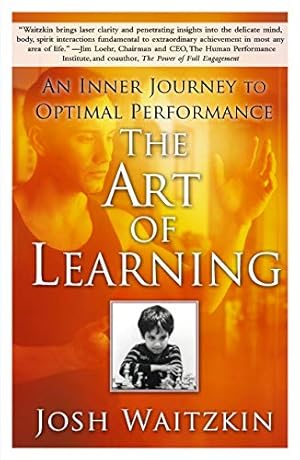
Hardcover$20.00$20.00Delivery Thu, Jun 11 - The Art of Learning: An Inner Journey to Optimal Performance
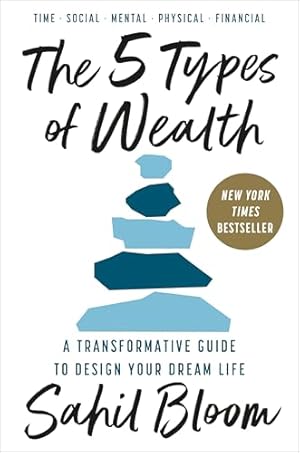
Paperback$10.72$10.72Delivery Thu, Jun 11 - The 5 Types of Wealth: A Transformative Guide to Design Your Dream Life
Hardcover$12.90$12.90Delivery Thu, Jun 11 - The Way of Excellence: A Guide to True Greatness and Deep Satisfaction in a Chaotic World
Hardcover$22.98$22.98Delivery Thu, Jun 11
From the Publisher
Vol 1
|
Vol 2
|
Vol 3
|
Vol 4
|
|
|---|---|---|---|---|
| Subject Matter | General Thinking Concepts | Physics, Chemistry, and Biology | Systems and Mathematics | Economics and Art |
| Concepts include… | The Map vs. The Territory, Second-Order Effects, Occam's Razor | Leverage, Inertia, Activation Energy | Compounding, Regression to the Mean, Law of Diminishing Returns | Creative Destruction, Representation, Genre |
| Page length | 208 | 400 | 384 | 416 |
| Illustrations throughout | x | x | x | x |
| New material | Fully revised and updated | Fully revised and updated | Fully revised and updated | Brand new volume with never-before-seen content |
Editorial Reviews
Review
— Matt Mullenweg, co-founder of WordPress, founder and CEO of Automattic
“If you’ve read Charlie Munger’s Almanack this is the book you deeply crave in its wake. … Learn the big ideas from the big disciplines and you’ll be able to twist and turn problems in interesting ways at unprecedented speeds. … You owe yourself this book.”
— Simon Eskildsen
“This is what non-fiction books should aspire to be like. Informative, concise, universal, practical, visual, sharing stories and examples for context. Definitely, a must-read if you’re into universal multi-disciplinary thinking.”
— Carl Rannaberg
“I can truly say it is one of the best books I’ve ever had the pleasure of getting lost in. I loved the book and the challenges to conventional wisdom and thinking it presents.”
— Rod Berryman
“Want to learn? Read This! This should be a standard text for high school and university students.”
— Code Cubitt
About the Author
Excerpt. © Reprinted by permission. All rights reserved.
In spite of what you majored in, or what the textbooks say, or what you think you're an expert at, follow a system wherever it leads. It will
be sure to lead across traditional disciplinary lines.
-Donella H. Meadows
Feedback Loops
Listen and incorporate.
Feedback loops are everywhere in systems, making them a useful mental model.
Think of feedback as the information communicated in response to an action. Whether we realize it or not, we give and receive different forms of feedback every day. Sometimes feedback is more formal, as is the case with performance reviews. Other times, it is less so. Our body language is a form of feedback for people interacting with us. The tone you use with your kids is feedback for them.
A feedback loop is a process in which the output of a system also acts as an input to the system, helping to refine and improve the system over time. It's like a conversation in which each reply helps to shape the next question and answer, making the discussion better and more focused.
Once you start looking for feedback loops, you see them all over the place, giving you insight into why people and systems react the way they do. For example, much of human behavior is driven by incentives. We want to take actions that lead to us getting something good or avoiding something bad on a range of timescales. The incentives we create for ourselves and other people are a form of feedback, leading to loops that reinforce or discourage certain behaviors. If you get visibly upset whenever someone at work offers you constructive criticism, you'll incentivize your colleagues to only tell you when you're doing something well-thereby missing out on chances to improve.
The challenge in using this mental model is that the ubiquity of feedback loops can become overwhelming. How do you know which ones to pay attention to? Or which ones to adjust to improve your outcomes?
We are constantly offering feedback to others about our feelings, preferences, and values. Others, in turn, communicate feedback on the same things, but we don't necessarily receive it or interpret it correctly. A critical requirement is learning how to filter feedback. Not all of it is useful. The quicker you learn to identify feedback that helps you progress, the faster you will move toward what you want to achieve.
Learning to communicate feedback in a way that makes it easy for others to receive is a valuable skill to develop. Feedback is crucial to relationships of all kinds. The skill is in giving feedback in a kind and clear way, in hearing it without getting defensive, and in partnering with people who can receive it on a regular basis. If you feel you can't communicate important thoughts and feelings, you won't be happy in that relationship or situation long-term. Much of relationship therapy consists of a therapist helping a couple tell each other things they have been afraid to say-when that feedback should have been free-flowing for years.
There is a larger implication here about working with the world. The world offers us feedback, but do we listen and incorporate, or do we just keep wanting it to work differently than it does?
The technical definition of a feedback loop comes from systems theory.
A feedback loop is a process in which the outputs (information) of a system affect that system's behaviors. Depending on the complexity of a system, there may be a single source of feedback or multiple, possibly interconnected sources. It helps to first consider feedback in a simple system as we do in the following, but keep in mind, we are part of many large systems that contain many interconnected feedback loops.
Feedback loops are a critical model because they are a part of your life whether you are aware of them or not. Understanding how they work helps you be more flexible with the variety of feedback you receive and incorporate, and then you can offer better feedback to others.
There are two basic types of feedback loops: balancing and reinforcing, which are also called negative and positive. Balancing feedback loops tend toward equilibrium. Your thermostat and heating system run on a balancing feedback loop. Information about the temperature of the house is communicated to the thermostat, which then adjusts the output of the furnace to maintain your desired temperature.
Reinforcing feedback loops amplify a particular process. They don't counter change, like your thermostat does. Instead, they keep the change going, as with the popularity of trends in fashion (in which styles become ubiquitous within months, only to disappear soon after) or the loops usually involved in poverty (in which different but related circumstances can compound the problem). Breaking out of reinforcing loops often requires outside intervention or a new change in conditions. Or, as with fashion, they simply burn themselves out after a while.
Within complex systems, feedback is rarely immediate. It can take a long time for changes in flows to have a measurable impact on how the system works. This delay complicates establishing cause and effect. In our lives, problems arise when the feedback for our actions is delayed or indirect, as is often the case.
A challenge to improving our decision making is getting accurate feedback on decisions. On one hand, consequences may take a long time to become apparent or may be hard to directly attribute to a particular decision. On the other, we may trap ourselves in maladaptive behaviors when something we do receives positive short-term feedback but has negative long-term consequences. Thus, it's important to remember immediate feedback isn't the only feedback. When you eat junk food, there is an instant hit of pleasure as your body responds to fat and sugar. After a little while, though, you receive other feedback from your body that indicates your choice of junk food has negative consequences. And over longer periods, conditions such as type 2 diabetes and high blood pressure provide more feedback from your body about the effects of your eating habits.
The faster you get useful feedback, the more quickly you can iterate to improve. Yet feedback can cause problems if it's too fast and too strong, as the system can surge. It's like when you press the gas or brake too heavily when first learning how to drive.
Feedback loops are a useful mental model because all systems have them, and we operate in a world of systems and subsystems.
Adam Smith and the Feedback Loop
of Reactions
You probably know Adam Smith as one of the most influential economists of all time, notable for his notion of the "invisible hand" of the market. But Smith's first book, The Theory of Moral Sentiments, is a work of philosophy. In it, he describes a different sort of invisible force that guides us: how the approval and disapproval of others, real or imagined, influences our behavior.
We are, by nature, selfish. We value ourselves above all other humans. Smith illustrates his point by suggesting that the news that your little finger must be amputated would likely be more stressing than the news of the deaths of a huge number of strangers overseas. Yet despite our inherent selfishness, the majority of people the majority of the time are cooperative and kind to one another. Smith believed our interactions with others are responsible for our well-established reciprocity. He saw others' responses to our behavior as feedback guiding how we act in the future. To do something selfish usually warrants a disapproving reaction. To do something selfless usually merits an approving one.
The feedback loop of others' reactions to our actions is the basis of civilization. Russ Roberts writes in How Adam Smith Can Change Your Life, "Smith's vision of what sustains civilization is the stream of approval and disapproval we all provide when we respond to the conduct of those around us. That stream of approval and disapproval creates feedback loops to encourage good behavior and discourage bad behavior."
This type of feedback doesn't just cover formal punishments and prohibitions according to the law where we live. It also covers the ways people respond to behavior that is just considered the norm. If a friend says hello to you on the street and you fail to acknowledge them, you haven't broken any laws, but they're likely to respond in a negative fashion. So you adhere to the norm. Smith writes: "When Nature formed man for society, she endowed him with a basic desire to please his brethren and a basic aversion to offending them. She taught him to feel pleasure in their favorable regard and pain in their unfavorable regard. She made their approval most flattering and most agreeable to him for its own sake, and their disapproval most humiliating and most offensive."
Smith asked readers to imagine a person who grows to adulthood without any interactions with other people. He believed such a person would have no awareness of their character and no notion of the right or wrong way to act. Our desire to be loved and accepted prompts moral behavior relative to the standards of our society. We in turn respond with approval of the same behavior on the part of others.
Everyday Loops
We can address many of the challenges we face every day by adjusting feedback loops. Figuring out how to change behavior (ours and others'), dealing with inaccurate information, and building trust are ongoing challenges. How to get customers to buy your product and not the competitors'; how to sort through information to find what's relevant to your decision; how to cooperate effectively with others: these are common situations many of us face.
All these dynamics play out on the larger social scale as well. How do societies incentivize the behavior they want and disincentivize the behavior they don't want? How do they get people to trust one another enough to keep society functioning?
Any system with an unchecked reinforcing feedback loop is ultimately unsustainable and destructive. Balancing feedback loops are more common in systems because they are sustainable-they maintain a system long-term, whereas reinforcing loops can crash and burn. In many societies, a legal system has historically served to stop reinforcing feedback loops from crumbling the social infrastructure and to promote balancing feedback loops that support desired dynamics. How they do it suggests options for addressing similar issues with feedback loops in our own lives.
Let's explore four aspects of social systems through the lens of feedback loops:
1. Creating the right future incentives
2. Influencing behavior at the margins
3. Dealing with information cascades
4. Building trust
Creating the Right Future Incentives
We want to minimize, as much as possible, making a choice today that creates a negative reinforcing feedback loop down the road. So, we consider the future incentives a decision will create.
A classic example of today's solution inadvertently creating a reinforcing feedback loop of future problems is paying off kidnappers. The immediate problem is someone being kidnapped and a ransom being demanded. If you have the resources to meet the kidnappers' demands, you might want to pay the money right away. You save a life and solve the problem.
However, your response communicates to the kidnappers that you will meet their demands. You thus create an incentive for them to kidnap again, as well as signal to other would-be kidnappers that there is money to be made. By paying a ransom, you create a powerful reinforcing feedback loop that causes more problems in the future.
In many legal systems, each decision by a court becomes a bit of information that moves via a feedback loop into the stock of legal options to influence both how the system responds to future cases and how judges form future decisions. Each decision becomes legal precedent. In The Legal Analyst, Ward Farnsworth explains that in making decisions courts will consider "what incentives people will have after the case is over." Courts need to be careful. If they compensate for a wrong now, they could create a climate that increases the chances of that wrong happening again.
One set of issues courts often face is questions of liability. If something bad happens to me, then does someone else need to pay to compensate? Sometimes the answer is yes, but not indiscriminately so. If we go back to the kidnapping example; let's say an American citizen is kidnapped overseas and the kidnappers demand the government pay for release. Is the government liable to compensate the victim's family for the loss of life if they choose not to pay the ransom? Most courts will answer no. If I am held liable, it incentivizes me to pay in the future, and we are back in the same reinforcing feedback loop. When considering certain instances of liability, Farnsworth explains, "Instead of looking back and deciding who should bear the suffering, [a court] can look ahead and decide what ruling will make the suffering less likely to occur later."
In some situations, choosing an immediate benefit creates reinforcing feedback loops that remove the possibility of future benefits. For cases like these, laws are designed to support balancing feedback loops, such as protecting attorney-client privilege, or copyright and patent laws. Although one could argue for the immediate benefit of, say, forcing a defense attorney to testify about what their client disclosed, the feedback loop created would make clients disinclined to disclose things to their attorney. As Farnsworth summarizes concerning copyright protection, "Once books and music exist . . . there's a great case for free distribution of them. But then they are less likely to exist at all next time."
People look around and often see what they view as unfairness-but they don't realize that unfairness sometimes has a greater purpose. Unfairness in specific cases creates fairness on the whole, as in the aforementioned cases. Often things happen that look like an injustice to the individual, and they may be so. But those things may create greater justice for the collective. Think of someone being "excessively" punished; that may seem unfair to them, but if it is successful in deterring others from committing the same infractions, it's not always such a bad idea.
Influencing Behavior at the Margins
Not everyone is likely to change their behavior in response to pressures, such as social or economic changes, at the same intensity and rate. Some people need more convincing; others need more time.
A good customer retention strategy doesn't lump all customers into one group. It might, for example, treat customers of ten years better than customers of six weeks. These are examples of margins. "Margins" can mean a lot of things in economics; in this case we mean "by increments," or "small changes"-shades of gray instead of all or nothing. Farnsworth explains thinking at the margin as "looking at problems not in a total, all-or-nothing way . . . but in incremental terms: seeing behavior as a bunch of choices about when to do a little less along one dimension and a little more along another."
Product details
- Publisher : Portfolio
- Publication date : October 15, 2024
- Edition : Reprint
- Language : English
- Print length : 384 pages
- ISBN-10 : 0593719999
- ISBN-13 : 978-0593719992
- Item Weight : 2.31 pounds
- Dimensions : 5.75 x 1.13 x 8.56 inches
- Book 3 of 4 : The Great Mental Models
- Best Sellers Rank: #63,827 in Books (See Top 100 in Books)
- #50 in Business Decision Making
- #94 in Decision-Making & Problem Solving
- #200 in Cognitive Psychology (Books)
- Customer Reviews:
About the authors

Shane Parrish is an entrepreneur, investor, and the wisdom seeker behind the popular website Farnam Street where he writes about hidden insights that you can use in life and business.
Parrish is a regular speaker and his work has been featured in places like The New York Times, The Wall Street Journal, and the Economist. His popular "Brain Food" newsletter is sent out to over 600k people each week and his podcast, The Knowledge Project, is one of the top in the world.
Parrish’s popular online course, Decision by Design, has helped thousands of executives, leaders, and managers worldwide learn the repeatable behaviors that improve decision-making results in the real world.

Discover more of the author’s books, see similar authors, read book recommendations and more.
Customer reviews
Customer Reviews, including Product Star Ratings help customers to learn more about the product and decide whether it is the right product for them.
To calculate the overall star rating and percentage breakdown by star, we don’t use a simple average. Instead, our system considers things like how recent a review is and if the reviewer bought the item on Amazon. It also analyzed reviews to verify trustworthiness.
Learn more how customers reviews work on AmazonReviews with images
Looks used
Top reviews from the United States
- 5 out of 5 stars
great mental models
Reviewed in the United States on May 10, 2025Enjoying the series. Lots of applicable mental models that helps us think through life. Looking forward to reading the next one in the series
Sending feedback...Sending feedback...HelpfulThank you for your feedback.Sorry, we failed to record your vote. Please try againThanks, we'll investigate in the next few days.Sorry, We failed to report this review. Please try again - 3 out of 5 stars
Usurps Legitimate Concept Labels to Sound Fancy
Reviewed in the United States on September 12, 2025My review is not about physical quality. There may be two physical implementations of the book. Mine was red & big.
My low rating of 3 stars is due to an irritation. There are plenty of interesting ideas , stories , notions. However, it irritated me to no end how the author usurps legitimate concepts from mathematics, etc. to use as fancy labels. The notions in the book are often NOT those labels, NOT the fully genuine notion in the respective field.
An excellent example -- and one that makes my [perhaps] vague statement of the previous paragraph more concrete -- is this one. Algorithm is absolute NOT a procedure. That's why we have the word 'procedure'. The author talks about screening many animals for ____ and thereby finding ____. Yes, I forget the exact details. But what was done was a procedure, NOT an ALGORITHM. An algorithm means that there is a logical entailment or set of logical entailments that thereby drives a search for a procedure that will satisfy those logical criteria / those logical implications / those logical restrictions. A procedure that does accomplish the goal of obeying those LOGICAL CONSIDERATIONS then is an algorithm.
Highfalutin terms are usurped throughout the book. (I read every word.) The legitimate applicability of the usurped terms varies from 0% applicable, to perhaps 80% or more, depending. But most concepts spoken of are NOT those of the fancy label.
Perhaps business people do that to sound fancy or pompous. They ought to invent their own words instead of erroneously usurping legitimate notions from other fields. "Churn" is an example where the business notion is done correctly. It is given a business word, rather than usurping a term from another field that has myriad implications for the field it was stolen from, but not for the business example or notion. "Churn" was OK, but many others were not.
In truth, as a scientist, metrologist (astute at measurement influences), statistician, philosopher -- but only the 1st (scientist) officially -- I just found the usurping ot terms insulting. Perhaps you wouldn't care at all. Then, if that be so, the rating would be 4-stars for the book. Still not 5 stars though.
5 people found this helpfulSending feedback...Sending feedback...HelpfulThank you for your feedback.Sorry, we failed to record your vote. Please try againThanks, we'll investigate in the next few days.Sorry, We failed to report this review. Please try again - 1 out of 5 stars
Looks used
Reviewed in the United States on December 22, 2024I bought this gift for a Christmas gift, and I am embarrassed to give it now since it came with grease marks all over the cover. Too late to order another, so I will leave it up to the recipient as to whether or not he returns it.

I bought this gift for a Christmas gift, and I am embarrassed to give it now since it came with grease marks all over the cover. Too late to order another, so I will leave it up to the recipient as to whether or not he returns it.
Sending feedback...Sending feedback...HelpfulThank you for your feedback.Sorry, we failed to record your vote. Please try againThanks, we'll investigate in the next few days.Sorry, We failed to report this review. Please try again - 1 out of 5 stars
damaged
Reviewed in the United States on December 10, 2024came damaged
Sending feedback...Sending feedback...HelpfulThank you for your feedback.Sorry, we failed to record your vote. Please try againThanks, we'll investigate in the next few days.Sorry, We failed to report this review. Please try again
Top reviews from other countries
Sharikc5 out of 5 starsone of the best tools for structured decision making
Reviewed in India on November 10, 2024This is in my top 10 books of all time. Am looking forward to reading the Mental Models of Economics and Art. I have studied economics, but the mathematics of art would be a lovely companion in my life.
Sending feedback...Thanks, we'll investigate in the next few days.Sorry, We failed to report this review. Please try again
Pip Boy2 out of 5 starsGood content. Poor book quality
Reviewed in Singapore on January 3, 2025Shane and his blog, Farnam Street, have always been a favorite of mine. I purchased this edition print because I’m a huge fan of the first edition. However, I’m disappointed with the quality of the print and paper. I understand that keeping costs low is important, but the pages were printed crookedly, and most of the illustrations from the first edition are missing. (I assume they’re sticking to black and white printing to keep costs down.) Despite these issues, I still love the content, but the crooked pages were a major distraction.
Sending feedback...Thanks, we'll investigate in the next few days.Sorry, We failed to report this review. Please try again
Bob Loblaw2 out of 5 starsToo expensive for what it is!
Reviewed in Canada on November 5, 2024Book was smaller than previous in the series. This one felt like it was printed off from the website. So disappointed.
Sending feedback...Thanks, we'll investigate in the next few days.Sorry, We failed to report this review. Please try again
SJim5 out of 5 starsQuality
Reviewed in the United Kingdom on March 8, 2025A quality read by Shane.
Sending feedback...Thanks, we'll investigate in the next few days.Sorry, We failed to report this review. Please try again
Ulises Wensell Martinez1 out of 5 starsCubierta maltratada
Reviewed in Spain on November 15, 2025Cubierta maltratada y deteriorada con roces y golpes.
Pero el libro es un magnífico ensayo. Estoy muy satisfecho por su enriquecedor enfoque. Un gran libro que recomiendo.



Cubierta maltratada y deteriorada con roces y golpes.
Pero el libro es un magnífico ensayo. Estoy muy satisfecho por su enriquecedor enfoque. Un gran libro que recomiendo.
Sending feedback...Thanks, we'll investigate in the next few days.Sorry, We failed to report this review. Please try again