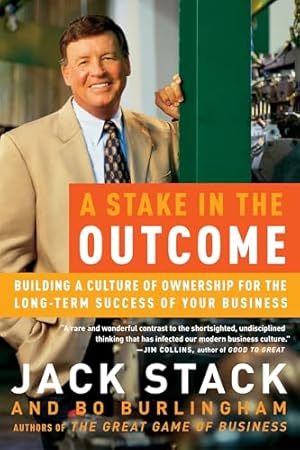


Buy New
-44%
$11.24$11.24
FREE delivery Thursday, June 11 on orders shipped by Amazon over $35
Ships from: Amazon.com Sold by: Amazon.com
Used - Like New
$7.57$7.57
FREE delivery June 15 - 17
Ships from: ThriftBooks-Chicago Sold by: ThriftBooks-Chicago
Sorry, there was a problem.
There was an error retrieving your Wish Lists. Please try again.Sorry, there was a problem.
List unavailable.
Download the free Kindle app and start reading Kindle books instantly on your smartphone, tablet, or computer - no Kindle device required.
Read instantly on your browser with Kindle for Web.
Using your mobile phone camera - scan the code below and download the Kindle app.

Follow the author
OK
The Founder's Dilemmas: Anticipating and Avoiding the Pitfalls That Can Sink a Startup (The Kauffman Foundation Series on Innovation and Entrepreneurship)
Purchase options and add-ons
A guide to the early decisions that can make or break startup ventures
Often downplayed in the excitement of starting up a new business venture is one of the most important decisions entrepreneurs will face: should they go it alone, or bring in cofounders, hires, and investors to help build the business? More than just financial rewards are at stake. Friendships and relationships can suffer. Bad decisions at the inception of a promising venture lay the foundations for its eventual ruin. The Founder's Dilemmas is the first book to examine the early decisions by entrepreneurs that can make or break a startup and its team.
Drawing on a decade of research, Noam Wasserman reveals the common pitfalls founders face and how to avoid them. He looks at whether it is a good idea to cofound with friends or relatives, how and when to split the equity within the founding team, and how to recognize when a successful founder-CEO should exit or be fired. Wasserman explains how to anticipate, avoid, or recover from disastrous mistakes that can splinter a founding team, strip founders of control, and leave founders without a financial payoff for their hard work and innovative ideas. He highlights the need at each step to strike a careful balance between controlling the startup and attracting the best resources to grow it, and demonstrates why the easy short-term choice is often the most perilous in the long term.
The Founder's Dilemmas draws on the inside stories of founders like Evan Williams of Twitter and Tim Westergren of Pandora, while mining quantitative data on almost ten thousand founders. People problems are the leading cause of failure in startups. This book offers solutions.
- Print length496 pages
- LanguageEnglish
- PublisherPrinceton University Press
- Publication dateApril 1, 2013
- Dimensions6.3 x 1.3 x 9.2 inches
- ISBN-100691158304
- ISBN-13978-0691158303
Book recommendations, author interviews, editors' picks, and more. Read it now.
Frequently bought together
Customers who viewed this item also viewed
Venture Deals: Be Smarter Than Your Lawyer and Venture CapitalistHardcoverGet it as soon as Sunday, Jun 21
The Hard Thing About Hard Things: Building a Business When There Are No Easy Answers―Straight Talk on the Challenges of EntrepreneurshipHardcoverFREE Shipping on orders over $35 shipped by AmazonGet it as soon as Thursday, Jun 11
The Lean Startup: How Today's Entrepreneurs Use Continuous Innovation to Create Radically Successful BusinessesHardcoverFREE Shipping on orders over $35 shipped by AmazonGet it as soon as Thursday, Jun 11
High Output ManagementPaperbackFREE Shipping on orders over $35 shipped by AmazonGet it as soon as Thursday, Jun 11
Zero to One: Notes on Startups, or How to Build the FutureHardcoverGet it as soon as Wednesday, Jun 17
The Outsiders: Eight Unconventional CEOs and Their Radically Rational Blueprint for SuccessHardcoverFREE Shipping on orders over $35 shipped by AmazonGet it as soon as Thursday, Jun 11
Customers also bought or read
- Venture Deals: Be Smarter Than Your Lawyer and Venture Capitalist
Hardcover$27.63$27.63Delivery Jun 21 - 25 - Slicing Pie Handbook: Perfectly Fair Equity Splits for Bootstrapped Startups (Mike Moyer's Virtual Dojo)
Paperback$16.95$16.95Delivery Thu, Jun 11 - The Lean Startup: How Today's Entrepreneurs Use Continuous Innovation to Create Radically Successful Businesses
Hardcover$14.07$14.07Delivery Thu, Jun 11 - The Partnership Charter: How To Start Out Right With Your New Business Partnership (or Fix The One You're In)
Paperback$11.26$11.26Delivery Thu, Jun 11 - The Hard Thing About Hard Things: Building a Business When There Are No Easy Answers―Straight Talk on the Challenges of Entrepreneurship
Hardcover$17.09$17.09Delivery Thu, Jun 11 - Life Is a Startup: What Founders Can Teach Us about Making Choices and Managing Change
Hardcover$17.17$17.17Delivery Thu, Jun 11 - Secrets of Sand Hill Road: Venture Capital and How to Get It
Hardcover$16.42$16.42Delivery Jun 12 - 15 - Why Startups Fail: A New Roadmap for Entrepreneurial Success
Hardcover$16.19$16.19Delivery Thu, Jun 11 - The Startup Owner's Manual: The Step-By-Step Guide for Building a Great Company
Hardcover$22.23$22.23Delivery Thu, Jun 11 - Business Model Generation: A Handbook for Visionaries, Game Changers, and Challengers
Paperback$17.02$17.02Delivery Mon, Jun 22 - Disciplined Entrepreneurship Startup Tactics: 15 Tactics to Turn Your Business Plan into a Business
Hardcover$24.86$24.86Delivery Thu, Jun 11 - Crossing the Chasm, 3rd Edition: The Updated Version of the Insightful Guide on Bringing Cutting-Edge Products to the Mainstream (Collins Business Essentials)
Paperback$13.98$13.98Delivery Thu, Jun 11 - Startup Boards: A Field Guide to Building and Leading an Effective Board of Directors
Hardcover$22.33$22.33Delivery Jun 14 - 17 - The Cold Start Problem: How to Start and Scale Network Effects
Hardcover$16.10$16.10Delivery Jun 18 - 24 - Zero to One: Notes on Startups, or How to Build the Future#1 Best SellerStarting a Business
Hardcover$16.99$16.99Delivery Jun 17 - 21 - Disciplined Entrepreneurship: 24 Steps to a Successful Startup, Expanded & Updated
Hardcover$22.99$22.99Delivery Thu, Jun 11 - High Growth Handbook: Scaling Startups from 10 to 10,000 People
Hardcover$14.00$14.00$3.99 delivery Jun 12 - 29 - Corporate Explorer: How Corporations Beat Startups at the Innovation Game
Hardcover$22.60$22.60FREE delivery Jun 15 - 22 - A Stake in the Outcome: Building a Culture of Ownership for the Long-Term Success of Your Business
Paperback$16.00$16.00Delivery Thu, Jun 11 - The Art of the Start 2.0: The Time-Tested, Battle-Hardened Guide for Anyone Starting Anything
Hardcover$8.37$8.37$3.99 delivery Jun 15 - 18 - Lost and Founder: A Painfully Honest Field Guide to the Startup World
Paperback$24.00$24.00Delivery Thu, Jun 11 - The Startup Owner's Manual: The Step-by-Step Guide for Building a Great Company
Paperback$27.24$27.24Delivery Thu, Jun 11 - Traction: How Any Startup Can Achieve Explosive Customer Growth
Hardcover$11.06$11.06Delivery Thu, Jun 11 - Ramping Your Brand: How to Ride the Killer CPG Growth Curve
Paperback$16.81$16.81$3.99 delivery Jul 1 - 6
From the Publisher
Editorial Reviews
Review
"Winner of the 2013 Silver Medal Book Award in Entrepreneurship, Axiom Business"
"Finalist for the 2013 George R. Terry Book Award, Academy of Management"
"[A] first-aid manual to help resuscitate ailing start-ups."---Jessica Bruder, New York Times
"Noam Wasserman is one of the writers and teachers who best captures the high stakes decisions that entrepreneurs face every day."---Scott Kirsner, Boston Globe
"The single-most indispensible guide for founders of startups. Comingling research, straight talk, and a human voice—so often lacking in books with an academic bent—Dilemmas totally rocks as a business school required read and a founder's gripping, absolute must-read. Turning the last page, anyone with an entrepreneurial femur in their body will be fully armed with a battery of knowledge that can make or break a passionate first or even fifteenth venture. Do not start a startup without this book."---Ted Sturtz, New York Journal of Books
"[A] seminal work. . . . Sure to be required reading in business school curricula, this illuminating and captivating read will also appeal to aspiring entrepreneurs or founders who want to make better decisions in existing ventures." ― Publishers Weekly
"Wasserman's book is on track to take as lofty a position in the entrepreneurial literature as Clayton Christensen's The Innovator's Dilemma did in the field of technological change."---Peter Cohan, Forbes
"[A] uniquely valuable resource for any entrepreneur."---Terrence Murray, Financialist
"The guru on this subject is Noam Wasserman . . . [an] insightful book."---Luke Johnson, BusinessDay
"The definitive book on the topic. . . . If you are a founder or thinking about becoming one, you should read this book."---Dharmesh Shah, OnStartups.com
"[A] must-read for anyone thinking of creating a startup, who is currently involved with one or who is an investor/advisor in the startup ecosystem."---Dilip James, Business Standard
"Highly recommended for those who plan to embark or are already living the entrepreneurial lifestyle, it can serve as a guide to very tough situations for founders to evaluate the best possible way out."---Bernard Leong, SGEntrepreneurs
"Wasserman illustrates his findings with real world examples that translate into immediately applicable advice. But rather than creating a prescriptive list of commandments that would be impossible to follow, he adopts a more holistic approach. Encouraging entrepreneurs to study how others have handled similar challenges in the past, his insights highlight the common ground found in seemingly unique situations." ― ForeWord
"There are plenty of books, lots with stories, anecdotes, and suggestions, but none that are particularly systematic about going through all of the issues. Noam's book is the first I've read—and he totally nails it."---Brad Feld, Feld Thoughts
"This is a serious book for a serious endeavor: creating a company from scratch that can be a world-beater and life-changer. . . . Wasserman's book is a towering guide to making these decisions thoughtfully and purposefully. Every founder should read it—and take the time to digest its rich data and lessons."---Jeff Bussgang, Seeing Both Sides
"Ten years of extensive research combined with winning case studies make this a trustworthy source not only for the potential startup owner but also for the classroom." ― Library Journal
"Sobering. . . . Wasserman provides a great deal of data and stories about high-potential technology and life-sciences startups. His book offers much more information than most entrepreneurs can handle at once, but it is probably essential for them to know."---Harvey Schachter, Globe & Mail
"Wasserman presents a series of entrepreneurship vignettes and case studies, drawn from a massive 10,000-founder survey he created. Due to the size of this business start-up survey, several of the stories, including accounts from founders of Blogger, Sittercity, and SmarTix, should prove fresh to readers. Much of the advice in the book governs key decisions founders have to make and factors that can cause decisions to turn out well or badly. . . . This work includes valuable, unique content." ― Choice
"The Founder's Dilemmas can't prevent entrepreneurs from repeating the mistakes of their predecessors; we all know how well human beings learn from history. But it's a worthwhile, prudent read for anyone considering or engaging in entrepreneurship. In pointing out the patterns, the common quandaries and routes, The Founder's Dilemmas can eliminate one headache along the path of business-building."---Tamara Micner, LSE Politics and Policy blog
Review
"The Founder's Dilemmas is required reading for entrepreneurs, venture capitalists, and the professionals who work with them. Few entrepreneurs appreciate the far-reaching implications of decisions they need to make at the beginning of a startup venture. Most founders make these critical decisions based on their gut instincts; backed up by data covering ten thousand founders, Noam Wasserman shows that the most common choices made at the outset of a new venture are often the wrong ones. This book also shines a light on the difficult conversations that entrepreneurs need to have with their colleagues and with their investors, and makes plainspoken, commonsense recommendations that facilitate this dialogue."—Pascal Levensohn, founding partner of Levensohn Venture Partners and member of the board of directors of the National Venture Capital Association (2007—2011)
"The Founder's Dilemmas will change the way we think about the internal dynamics that can make or break startup companies. Drawing on substantial research and considerable insight into practice, Wasserman uncovers the inner lives of startups, exploring the personal and professional conflicts that founders encounter on their entrepreneurial journeys. His book will appeal to academics and practitioners alike."—Thomas Hellmann, University of British Columbia
"The research that Noam Wasserman has assembled here can help entrepreneurial companies who want to prepare well for their future. The Founder's Dilemmas is a must-read for anyone thinking about starting a business."—Timothy C. Draper, founder of Draper Fisher Jurvetson
"Looking at the real-life founder issues of many accomplished entrepreneurs, Noam Wasserman draws insights that are both universal and timeless. If you're thinking of starting a new venture, do your homework and read this first."—Jeremy Stoppelman, CEO and cofounder of Yelp
"Noam Wasserman takes you through every major issue in a startup and shows you how to handle it in a prescriptive, logical way. The Founder's Dilemmas is for everyone thinking about starting a serious company, with their eye on a big prize, and for the people who invest in those companies."—Paul Maeder, chairman of the National Venture Capital Association, founder and general partner of Highland Capital Partners
"If you're starting a new company, you probably already know that a crazy variety of land mines await you. What if you had a map that showed exactly where they are and how to avoid them? Wasserman's recommendations are backed up by rigorous research—a rare thing in books about entrepreneurship—and his stories and anecdotes serve as accessible illustrations of situations faced by thousands of companies. Having seen these dilemmas derail countless startups, I wish every entrepreneur and prospective founder would read this book."—Eric Ries, author of The Lean Startup
"Every entrepreneur faces trade-offs when founding and growing their company. As we discovered at YouTube, those early decisions have far-reaching impacts and lead to unforeseen pitfalls down the road. Noam Wasserman uses vivid anecdotes and deep research to expertly outline the key early choices that define a startup, making The Founder's Dilemmas an invaluable alternative to real-world trial and error."—Chad Hurley, founder-CEO of YouTube
"A wonderful book. It's a must read before you have even one more discussion with anyone about starting a company with them."—Melinda Thomas, Entrepreneur-in-Residence for the City of New York
"The Founder's Dilemmas fills an important gap in the entrepreneurship literature by providing an in-depth treatment of the people problems that confront all new business founders. Wasserman argues that people problems are responsible for a significant portion of startup failures, and that entrepreneurs tend to underestimate their potentially dangerous long-term effects. In this pathbreaking book, he grounds the analysis of these problems in both richly textured case examples and rigorously developed concepts and theories."—Ari Ginsberg, director of the Berkley Center for Entrepreneurial Studies at New York University's Stern School of Business
"This book offers a rich understanding of the central personal dilemmas that entrepreneurs uniquely face. These dilemmas are tied to particular choices for entrepreneurs that can have subtle and unexpected ramifications. I don't know of any other book that comes close to examining these specific and important issues."—Kathleen M. Eisenhardt, Stanford University, coauthor of Competing on the Edge: Strategy as Structured Chaos
From the Back Cover
"This book provides the rare combination of practical advice and scholarly research. It gets to the heart of the people issues that can bedevil every, and I do mean every, startup. Issues such as founder motivations, equity splits, and equity control can make or break a company. I guarantee that the price of this book is approximately one-thousandth of what you'll pay lawyers to clean up your mess if you don't read it."--Guy Kawasaki, author of Enchantment and former chief evangelist of Apple
"The Founder's Dilemmas is required reading for entrepreneurs, venture capitalists, and the professionals who work with them. Few entrepreneurs appreciate the far-reaching implications of decisions they need to make at the beginning of a startup venture. Most founders make these critical decisions based on their gut instincts; backed up by data covering ten thousand founders, Noam Wasserman shows that the most common choices made at the outset of a new venture are often the wrong ones. This book also shines a light on the difficult conversations that entrepreneurs need to have with their colleagues and with their investors, and makes plainspoken, commonsense recommendations that facilitate this dialogue."--Pascal Levensohn, founding partner of Levensohn Venture Partners and member of the board of directors of the National Venture Capital Association (2007--2011)
"The Founder's Dilemmas will change the way we think about the internal dynamics that can make or break startup companies. Drawing on substantial research and considerable insight into practice, Wasserman uncovers the inner lives of startups, exploring the personal and professional conflicts that founders encounter on their entrepreneurial journeys. His book will appeal to academics and practitioners alike."--Thomas Hellmann, University of British Columbia
"The research that Noam Wasserman has assembled here can help entrepreneurial companies who want to prepare well for their future. The Founder's Dilemmas is a must-read for anyone thinking about starting a business."--Timothy C. Draper, founder of Draper Fisher Jurvetson
"Looking at the real-life founder issues of many accomplished entrepreneurs, Noam Wasserman draws insights that are both universal and timeless. If you're thinking of starting a new venture, do your homework and read this first."--Jeremy Stoppelman, CEO and cofounder of Yelp
"Noam Wasserman takes you through every major issue in a startup and shows you how to handle it in a prescriptive, logical way. The Founder's Dilemmas is for everyone thinking about starting a serious company, with their eye on a big prize, and for the people who invest in those companies."--Paul Maeder, chairman of the National Venture Capital Association, founder and general partner of Highland Capital Partners
"If you're starting a new company, you probably already know that a crazy variety of land mines await you. What if you had a map that showed exactly where they are and how to avoid them? Wasserman's recommendations are backed up by rigorous research--a rare thing in books about entrepreneurship--and his stories and anecdotes serve as accessible illustrations of situations faced by thousands of companies. Having seen these dilemmas derail countless startups, I wish every entrepreneur and prospective founder would read this book."--Eric Ries, author of The Lean Startup
"Every entrepreneur faces trade-offs when founding and growing their company. As we discovered at YouTube, those early decisions have far-reaching impacts and lead to unforeseen pitfalls down the road. Noam Wasserman uses vivid anecdotes and deep research to expertly outline the key early choices that define a startup, making The Founder's Dilemmas an invaluable alternative to real-world trial and error."--Chad Hurley, founder-CEO of YouTube
"[A] wonderful book. . . . It's a must read before you have even one more discussion with anyone about starting a company with them."--Melinda Thomas, Entrepreneur-in-Residence for the City of New York
"The Founder's Dilemmas fills an important gap in the entrepreneurship literature by providing an in-depth treatment of the people problems that confront all new business founders. Wasserman argues that people problems are responsible for a significant portion of startup failures, and that entrepreneurs tend to underestimate their potentially dangerous long-term effects. In this pathbreaking book, he grounds the analysis of these problems in both richly textured case examples and rigorously developed concepts and theories."--Ari Ginsberg, director of the Berkley Center for Entrepreneurial Studies at New York University's Stern School of Business
"This book offers a rich understanding of the central personal dilemmas that entrepreneurs uniquely face. These dilemmas are tied to particular choices for entrepreneurs that can have subtle and unexpected ramifications. I don't know of any other book that comes close to examining these specific and important issues."--Kathleen M. Eisenhardt, Stanford University, coauthor of Competing on the Edge: Strategy as Structured Chaos
About the Author
Product details
- Publisher : Princeton University Press
- Publication date : April 1, 2013
- Edition : First Edition
- Language : English
- Print length : 496 pages
- ISBN-10 : 0691158304
- ISBN-13 : 978-0691158303
- Item Weight : 1.5 pounds
- Dimensions : 6.3 x 1.3 x 9.2 inches
- Part of series : The Kauffman Foundation Series on Innovation and Entrepreneurship
- Best Sellers Rank: #62,035 in Books (See Top 100 in Books)
- #60 in Starting a Business (Books)
- #142 in Entrepreneurship (Books)
- #218 in Business Management (Books)
- Customer Reviews:
About the author

"LIFE IS A STARTUP": #1 AMAZON BESTSELLER IN ENTREPRENEURSHIP
"THE FOUNDER'S DILEMMAS" -- #1 AMAZON BESTSELLER IN NEW BUSINESS ENTERPRISES, #1 IN MANAGEMENT, #1 IN BUSINESS SYSTEMS & PLANNING, #2 IN POPULAR ECONOMICS
Dr. Noam Wasserman is bestselling author of The Founder’s Dilemmas: Anticipating and Avoiding the Pitfalls That Can Sink a Startup (2012, Princeton Univ. Press) and Life Is a Startup: What Founders Can Teach Us about Making Choices and Managing Change (2018, Stanford Univ. Press). He was a professor at Harvard Business School for 13 years and is now founding director of the Founder Central initiative at the University of Southern California and the Lemann Chair in Entrepreneurship.
Noam created HBS’s most popular entrepreneurship elective, “Founder’s Dilemmas,” for which he won HBS’s Faculty Teaching award and USC’s Golden Apple teaching award. He also won the Academy of Management’s Impact on Practice award and its Innovation in Entrepreneurship Pedagogy award.
He was a Principal at a firm where he founded and led the Groupware Practice, and worked as a venture capitalist. Noam received a PhD and MBA from Harvard University, a BSE (Penn Engineering), and a BS (Wharton).
Customer reviews
Customer Reviews, including Product Star Ratings help customers to learn more about the product and decide whether it is the right product for them.
To calculate the overall star rating and percentage breakdown by star, we don’t use a simple average. Instead, our system considers things like how recent a review is and if the reviewer bought the item on Amazon. It also analyzed reviews to verify trustworthiness.
Learn more how customers reviews work on AmazonCustomers say
Generated from the text of customer reviewsSelect to learn more
Top reviews from the United States
- 5 out of 5 stars
This is a must read for anyone in the entrepreneurial/venture capital space.
Reviewed in the United States on May 16, 2016Book Review of The Founder's Dilemmas: Anticipating and Avoiding the Pitfalls That Can Sink a Startup by Noam Wasserman
Just occasionally you read a book that you wish you had read 25 years ago. I worked in the entrepreneurial/venture capital sector 1984-2007 and I so wish I had read this book in 1984. Unfortunately it was not published until 2012 so it was not possible but if you are (budding) entrepreneur, potential start-up hire, angel investor or venture capitalist you should really read this book. This is the first book that really gets to the human side of entrepreneurship but is based on the evidence of a ten year study of some 2000 technology and life science start-ups for the period 2000-9.
Note the title; it is dilemmas not dilemma. In this book Wasserman identifies a number of defining moments in the trajectory of a start-up where the entrepreneur must make a choice which while it may appear to be operational or tactical ends up having significant strategic consequences For example a the first decision for an founder to determine what is his or her motivation? Is it wealth-or-control ("do you want to be king or want to be rich?").
This really resonated with me. For 12 years I was the Executive Chairman of Nanyang Ventures which had three early stage funds doing Series A & B investments. One of innovations when I introduced at Nanyang Ventures was to psychologically profile the entrepreneurs. What we discovered after five years is that our winners had three key characteristics.
1. They had high numerical intelligence. They could understand the numbers. We thought we could compensate for those who had high general and verbal intelligence but low numerical IQ with a competent CFO. We were wrong.
2. They were dominated by the desire for economic success. The personality tool we used was the Humm Wadsworth as it is one of the few tests that measures this factor. Initially we were looking for energetic team builders who were decisive and competitive (kings). Again we were wrong. Wasserman lists the problems that ‘king’ entrepreneurs and venture capital investors may have. We had all of them, many in triplicate.
3. They were also dominated by the desire to complete projects and saw the start-up as a series of projects. They were extremely task orientated and focused on the technical details. They were into planning and compulsively reading everything they could about a project. Their passion ignited the rest of their team. We had not picked this factor as being necessary; again we were wrong.
Some of the Amazon reviews criticise it for being academic. I could not disagree more. This book resonates with reality
51 people found this helpfulSending feedback...Sending feedback...HelpfulThank you for your feedback.Sorry, we failed to record your vote. Please try againThanks, we'll investigate in the next few days.Sorry, We failed to report this review. Please try again - 4 out of 5 stars
not on lifestyle businesses intended only to keep the founder comfortable. He also accessed a wide range of reliable ...
Reviewed in the United States on April 11, 2017Every economy needs a steady flow of “start-ups” (new businesses,) to grow and create jobs. Estimates vary on the value to the country of small business, but there is strong support for the idea that small businesses create more jobs larger companies. And, behemoths such as Microsoft, Facebook and Google were once start-ups.
The problem is that of seven start-ups only two will be operating in a year later! That is a 71% failure rate. Imagine if close to all business that started succeeded, and went on to employ only five people. In a short time our “national scar,” unemployment, would be on the way down and prosperity on the way up.
Naom Wasserman has assembled superb data from his research on over 10,000 new businesses that were set to grow large. His research focused exclusively on businesses that were intended to grow large, not on lifestyle businesses intended only to keep the founder comfortable. He also accessed a wide range of reliable data from other sources to formulate this book.
What makes Wasserman’s book so unusual is his focus on a fact over research overlooks. More business start-ups fail because of internal problems caused by the founders’ errors of judgement than by external causes. If founders in the initial stages could make better decisions, many more businesses would be saved, and more would thrive.
Wasserman has identified clear a set of dilemmas facing founders. Choices have to be made between alternatives with no choice obviously better than another. All come with significant upsides and downsides. Solved appropriately, the founders will survive to face the next dilemma. Fail, and there could be no next dilemma.
“This book’s central message is that these founding decisions need to be made by design, not by default,” say Wasserman.
There are four primary founding decisions that make up the content of the book. Each dilemma is analysed, and its implications made clear. This clarity will help you, and those you care about make better, safer decisions.
At the “Pre-founding” stage, there are a set of dilemmas regarding when to launch the start-up. There are at least three major areas of considerations. If you do not have enough money, it may be wise to work for someone else until you do. Perhaps you should you borrow money and start right now? If you delay the start of the business, will you have missed the wave?
There is no one right answer to this question, and it requires the consideration of a number of factors. Are you able to ensure the security of your family (if you are responsible for one?) If you have savings or a retrenchment package will that suffice? Does your life-partner earn sufficiently to support the family? If she does, is she completely committed to your success to pay her part while you play yours? If not, the strain of founding the business may exhaust your strength and shatter your relationship. Are you locked in the golden handcuffs of a secure job?
These and many more profound and difficult questions need probing and honest answers.
Once you have made the decision to start a business, you face the “Founding Team Dilemmas” . Are you able to start a business alone or should you have others doing this with you? There are always skills that are required, but cannot reside in one person. Then there may be a need to work with another person who has your commitment to the success of the venture.
The need to work with others raises the “Relationship Dilemma” of to attract. Will the business work best if you team up with friends, family, acquaintances or strangers? Should you seek someone you have actually worked with before?
The “Role Dilemma” follows from this. What are the positions each one of you should assume in the new business?
How should each person be rewarded for their contribution to the venture? If you reward with more equity than is deserved, you cannot take it back when this becomes apparent. “Reward Dilemmas” are especially dangerous at the beginning of a business when there is nothing tangible. Giving away half of nothing but a promise is easy. However, when the business makes money, paying dividends to someone who never deserved it takes on a different hue. Few mistakes sour relationships more profoundly.
Beyond the dilemmas of the founding team are the “Investor Dilemmas.” Most businesses require funding to take off in a meaningful way.
You can turn to family and friends, “angel” investors, or venture capitalists. Accessing each these sources become progressively harder, and each poses its dilemmas.
For example, when take money from you pensioned parents, you do this believing you will succeed. Five of seven businesses never succeed causing great harm to people close to you. Borrowing from family and friends is best when it is a gift that come with love, not an investment.
Angel investors are investors but tend not to be professional investors. They are often people who have money and are prepared to “take a punt” on what looks like a “good idea” in exchange for equity and a high return. As with all investors, you will be required give up a portion of your business to the investor in exchange for the support.
At every stage there are dilemmas that if not confronted and not addressed thoughtfully, will do more damage to the fledgling business than problems that come from external forces.
Self-inflicted wounds can be avoided. Forewarned is forearmed. Read Wasserman’s profound book.
Readability Light ---+- Serious
Insights High +---- Low
Practical High -+--- Low
*Ian Mann of Gateways consults internationally on leadership and strategy and is the author of Strategy that Works.
18 people found this helpfulSending feedback...Sending feedback...HelpfulThank you for your feedback.Sorry, we failed to record your vote. Please try againThanks, we'll investigate in the next few days.Sorry, We failed to report this review. Please try again - 5 out of 5 stars
Answering the Meta Questions
Reviewed in the United States on August 2, 2012Prof. Wasserman's book on Founder's dilemmas is a must read for every aspiring entrepreneur. And by that I do mean every single aspiring entrepreneur. For full disclosure I am an entrepreneur in the biotech industry and have lived many of the choices than dilemmas that Prof. Wasserman has described. I so wish it would have been available earlier to me and my fellow founders. It certainly would have reduced the stress reduce the number of difficult choices we have had to make.
The book is both comprehensive as well as a true reflection of the early start-up world from the human perspective. Nine times out of ten, the "technology" or the "market" or just the "idea" are at the center of the entrepreneurs mind, while the most important, in fact the first and pivotal piece of the puzzle receives too far attention - the founder. No founder is looking further ahead than 3, 6, 9 or 12 months - early stage ventures are simply in too tumultuous a stage of development for that. Furthermore rarely do they think about the strategic interpersonal issues that are so often overlooked - I know I didn't. But they should. And this book provides an approach that structures the thought process.
Prof. Wasserman has done what few people (certainly not stressed entrepreneurs) could have done: he's asked the meta questions. Not to sound philosophical but it's a tough question to ask "why do we do what we do", and "what do we want [to achieve]". Even constricted to the startup space it's still a momentous question to answer but taking a data-centric approach has crystallized at least a framework within which Prof. Wasserman goes about exploring the motivations behind the people. That's what it's really about. What do the people (the founders) want?
The power of the framework lies in it's simplicity: you can be either rich, or you can be in control of your venture, almost never both, notable exceptions notwithstanding.
That's it. Nothing more and nothing less.
Few founders I have spoken to, have had that clear a framework in mind, much less have been able to articulate it (myself included). Eventually one comes to a realization of what it is that one wants, but often than not, one is in a situation that is suboptimal, and could have been solved better if those motivations / questions were properly known and answered.
This is truly a book written for founders. It must be mandatory reading in every incubator of which so many should be popping up; every VC should buy a case of the books and give every founding team (better late than never!); and every business plan contest should distribute this book to their contestants (charge an extra fee or do it free but do it!).
3 people found this helpfulSending feedback...Sending feedback...HelpfulThank you for your feedback.Sorry, we failed to record your vote. Please try againThanks, we'll investigate in the next few days.Sorry, We failed to report this review. Please try again - 5 out of 5 stars
Great place to start, straight forward and easy to digest
Reviewed in the United States on December 10, 2012I am finishing chapter 4 now. This book has so much great insight and data from actual people and experiences of other founders. I find it an invaluable tool and companion before taking the leap into being a founder.
I appreciate the scientific approach to the surveys and statistics that back up the author's reasoning/findings and is not just a subjective opinion. I would have done 99% of the pitfalls others have, but now I am confident that I won't start my company without first finishing this book.
I recommend this to anyone starting or thinking of starting their own company. And it doesn't matter what stage your company/idea/industry is in.
I do not share at all any of the other reviewers' opinions that this guy got paid by the word or is too redundant or isn't insightful enough.
I have many years of experience in sales, running companies, managing projects, technical design and programming. This book has made me realize the gaps and strengths I bring to the table, the important decisions I need to make now and in the future, and the strategies I need to implement in order to succeed.
2 people found this helpfulSending feedback...Sending feedback...HelpfulThank you for your feedback.Sorry, we failed to record your vote. Please try againThanks, we'll investigate in the next few days.Sorry, We failed to report this review. Please try again - 5 out of 5 stars
So many useful insights from unusually deep research
Reviewed in the United States on August 26, 2012I've read millions of words on this topic over the past 40 years and worked with and in such companies for 30 years and find the depth of the author's research (10 years, thousands of companies especially compelling. His conclusions both ring true (actually unusual in so much poorly-researched writing on this topic by others) and have significant insights and patterns recognized on nearly every page. It's also writing about the most important and useful topic rather than a tangental one like strategy or funding nuances, how the founding management team comes together, works, and falls apart. Innovative companies and start-up businesses have far more volatile and random management teams than large stable organizations do but most writers and observers come from large stable organizations so the perceptual bias is subtle and considerable. This is a must-have book for people building innovative businesses that require considerable growth quickly to be viable and of great use to venture capitalists, angel investors especially, private equity analysts, commercial loan and credit officers at banks, business advisors, engineers and scientists, research funders, and economic development professionals.
One person found this helpfulSending feedback...Sending feedback...HelpfulThank you for your feedback.Sorry, we failed to record your vote. Please try againThanks, we'll investigate in the next few days.Sorry, We failed to report this review. Please try again - 3 out of 5 stars
The Founder’s Dilemmas – The Answer is “It depends!”
Reviewed in the United States on December 12, 2013The Founder’s Dilemmas is at the same time a fascinating and frustrating book. Fascinating because it’s providing very seldom seen (and mostly unknown) data about founders and high-tech start-ups. Frustrating because it is also seldom providing answers to the dilemmas founders may face. It took me the full reading of the book to finally understand that the answer Wasserman provides is that there is no best solution for a founder facing a problem, but that if he knows all possible situations, he might better decide based on his own motivation and … personality. So she or he might decide, not on rational criteria but more because of his personal inclinations!
The best illustration of this is Evan Williams who was a founder of Blogger, and then of Odeo (and then after the book was designed of Twitter). Williams had a very different behavior with the two start-ups. He was “control-oriented” with Blogger, hiring people in his close network, taking friends and family (and close network) money only and keeping management control to the point of firing everyone including his former co-founder and girlfriend. With Odeo, he had initially a “wealth-oriented” attitude, taking VC money and having a different hiring strategy. His inclination made him however buy back his investor’s stake, as he needed to control his start-up again.
Wasserman shows that the “3Rs” (Relationships, Roles & Rewards) are key features for decisions about the key dilemmas founders may experience. These dilemmas are classified according to the chapters of the book: Career, Solo-vs.-Team, Weak vs. Network, Positions, Compensations, Hiring, Investors, and Succession. Wasserman explains (or better-said describes) the various dilemmas founders face when taking decisions and shows that their decisions are very often dependent upon their motivation. Do they want to be Kings (power or control-oriented) or Rich (wealth oriented)? He does it with anecdotes (not so good and quite well-known) and with statistics (very good and not so well-known)
In summary I saw it more as a book for academics than for entrepreneurs and founders who apparently will not take better decisions after reading this book as they will be driven by their motivations, not their experience! At least they will be aware of it. It may be another illustration that youth and enthusiasm are as important as experience and rational behaviors!
One interesting puzzle Wasserman addresses is why individuals decide to become entrepreneurs, often thinking that they will become wealthy whereas this is entirely wrong. This has to do with control vs. wealth. You will need to read Wasserman if you want to know more.
11 people found this helpfulSending feedback...Sending feedback...HelpfulThank you for your feedback.Sorry, we failed to record your vote. Please try againThanks, we'll investigate in the next few days.Sorry, We failed to report this review. Please try again - 4 out of 5 stars
Great for teaching entrepreneurship, not so great for your average founder
Reviewed in the United States on November 17, 2023This book came with recommendations from every other author you know who writes about entrepreneurship- Eric Reis, etc. That makes sense, since it is designed to impress them, not actually help a founder. It is also really, really good if you want to teach entrepreneurship, and want to be ready with answers to many many questions founders may ask you.
But it is also like telling a 21-year old young one to read the [1000-year-old philosophy/religious text of your choice] that really does have all the answers. It is true, but it does not help them. "Do not steal" is true, but we have all learned only after facing the consequences (hopefully it was just candy from your sibling when you were 4).
Other reviewers have summarized the book beautifully. I will point you towards them if you want the bullet point take-aways.
No really- read this. This book is like the veggies you did not like as a child. Good for you, but you will realize that only when all the smoking and drinking catches up with you.
Sending feedback...Sending feedback...HelpfulThank you for your feedback.Sorry, we failed to record your vote. Please try againThanks, we'll investigate in the next few days.Sorry, We failed to report this review. Please try again - 5 out of 5 stars
It does a great job of laying out the pros and cons to ...
Reviewed in the United States on November 23, 2017This book helped me make the decision to start a technology company with a previous coworker. It does a great job of laying out the pros and cons to decisions that are too often prone to emotional thinking, like who to start a company with, who to take funding from, how to distribute titles and equity amongst cofounders, etc. Large portions of the book are amenable to speed reading, but useful, informative content is distributed evenly throughout the book. The author does a great job helping you think through starting a high-growth company off on the right foot wrt structure, and paints complex decisions in appropriate shades of grey. This book will not help you find an idea, an it will not motivate you to start a company, but it should make the decision clear. This book is less suitable for people who want to start small businesses, but I would highly recommend it to people thinking about that anyway with four stars. It's a definite fiver for those more interested in the decisions around starting a high growth company.
5 people found this helpfulSending feedback...Sending feedback...HelpfulThank you for your feedback.Sorry, we failed to record your vote. Please try againThanks, we'll investigate in the next few days.Sorry, We failed to report this review. Please try again
Top reviews from other countries
Rosa Guadagnini5 out of 5 starsO melhor
Reviewed in Brazil on September 14, 2019Excelente livro
Sending feedback...Thanks, we'll investigate in the next few days.Sorry, We failed to report this review. Please try again
Laurent Bouchou4 out of 5 starsA lire avant de s'associer ou non dans le cadre de la création d'une société
Reviewed in France on November 28, 2012Clairement sur le web, d'après notre propre expérience, ou auprès de son entourage, on va trouver toutes les théories et leur contraire décrivant les bonnes raisons de s'associer ... ou de fuir l'association.
Pour une fois, tout cela repose sur des statistiques, des agrégations d'expériences passées, des commentaires qui vous parleront si vous avez déjà eu l'occasion de créer auparavant et dresse la liste des bonnes et des mauvaises raisons de s'associer. Bref des conseils, de la méthodologie, une lecture aisée, un petit bonheur.
Bonne lecture à tous
Sending feedback...Thanks, we'll investigate in the next few days.Sorry, We failed to report this review. Please try again
Andrew Bishop4 out of 5 starsI found the book a great source of practical
Reviewed in Australia on August 15, 2016This is fully of research-backed insights into the pros and cons that flow from some of the most key choices a founder has to make as they move from start up stages. As someone with a keen interest in starting businesses, I found the book a great source of practical, validated guidance. The writer tends to labour the point on occasion and this is the only reason the book doesn't get 5 stars.
Sending feedback...Thanks, we'll investigate in the next few days.Sorry, We failed to report this review. Please try again
Hector R.5 out of 5 starsStatistics galore
Reviewed in Mexico on January 16, 2020This book is mainly for statistics and interpretation of such. I wish it was simpler and more direct. Very useful for research purposes though!
Sending feedback...Thanks, we'll investigate in the next few days.Sorry, We failed to report this review. Please try again
Amazon Customer5 out of 5 starsJust perfect
Reviewed in Germany on August 26, 2020If you are entrepreneur, and if you like data and not just assumptions, go for it. If you have a startup, this book is a must, will save you loads of time. Top 3 for me besides being not that new.
Sending feedback...Thanks, we'll investigate in the next few days.Sorry, We failed to report this review. Please try again